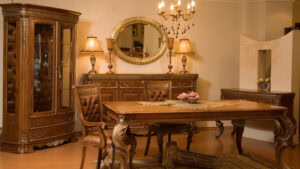
Turning a furniture idea into a reliable bulk order requires more than sending a reference image to a factory. The design must be translated into clear specifications, tested as a physical sample and reproduced consistently at scale. This guide explains the essential OEM/ODM furniture development process and the decisions buyers should confirm at each stage.
OEM vs. ODM Furniture Development
The two models start from different levels of design input.
| OEM | ODM | |
| Buyer provides | Detailed drawings, specifications, and branding requirements | A concept, sketch, mood board, or reference image |
| Manufacturer provides | Engineering review, sampling, and production | Design development, engineering, sampling, and production |
| Best for | Brands with a developed product | Buyers creating or adapting a collection |
Many projects combine both approaches. A buyer may define the appearance while the manufacturer develops the joinery, internal frame, finish system or packaging. The important point is to agree on responsibilities before development begins.
The Process at a Glance
| Stage | Main Task | Approval Point |
| 1. Design brief | Define the product, market, cost, and schedule | Project scope confirmed |
| 2. Feasibility | Review structure, materials, and commercial terms | Quotation accepted |
| 3. Engineering | Create production-ready drawings | Technical details approved |
| 4. Materials and sample | Select finishes and build a prototype | Golden sample approved |
| 5. Pre-production | Lock specifications, packaging, and QC criteria | Production files approved |
| 6. Bulk production | Manufacture with in-process inspections | Deviations reviewed |
| 7. Final inspection | Check products, cartons, and documents | Shipment released |
The process is not always linear. A sample may reveal that a joint needs strengthening or a finish needs adjustment. Resolving these issues before production protects the schedule and reduces expensive rework.
1.Start with an Actionable Design Brief
“We need a French-style dining chair” describes a direction, not a production brief. A useful brief connects the design idea with the intended market, performance requirements and commercial limits.
Buyers should provide:
- product type and intended use;
- target market and applicable standards;
- drawings, sketches or reference images;
- overall and critical ergonomic dimensions;
- preferred wood, fabric, finish and hardware;
- required functions, load or durability;
- branding and packaging requirements;
- target price, quantity and delivery date.
If some details remain open, rank the priorities. For example, the target price may be fixed while the wood species can be adjusted. This gives the development team room to find a practical solution without losing the intended look or market position.
2.Confirm Feasibility Before Finalizing the Price
Before quoting, the manufacturer should assess whether the product can be made safely, consistently and within budget. The review normally covers structural stability, material availability, special processes, tooling, packaging volume, order quantity and destination-market requirements.
The buyer should check more than the unit price. Confirm:
- material and finish specifications;
- sample cost and revision policy;
- MOQ and SKU breakdown;
- packaging method;
- payment and trade terms;
- production lead-time assumptions.
Hoolnn mainly works on FOB terms and lists a standard production lead time of 45–60 days. Sampling, revisions, testing and ocean freight should be planned separately. Actual timing depends on product complexity, material availability, quantity and approval speed.
3.Convert the Concept into Technical Drawings
A sketch may communicate the design, but bulk production requires objective instructions. Technical drawings define dimensions, materials, joinery, internal construction and functional details.

For a dining chair, the drawing may specify seat height and angle, rail and leg dimensions, joint reinforcement, foam construction, upholstery details and allowable tolerances. This is where the team balances appearance, comfort, strength, cost and repeatability.
The buyer should approve the drawing before sample construction. Changing a dimension on paper is faster and less expensive than rebuilding a finished prototype.
4.Approve Materials, Finish and the Prototype
Furniture materials are both technical and visual. Digital images cannot accurately communicate wood grain, fabric texture, sheen or the depth of an antique finish, so physical standards are essential.
Hoolnn commonly uses kiln-dried oak, birch and recycled wood across its dining room, living room and bedroom furniture ranges. For solid wood furniture, moisture control must suit the destination climate to reduce the risk of warping, shrinkage or cracking.

The finish sample should define color, sheen, grain appearance and any distressing or patina. For upholstery, confirm the exact fabric, color, foam firmness, seams, piping and tufting. Hoolnn offers materials including linen, cotton and polyester for products such as sofas and dining chairs. The completed prototype should then be checked as a whole.
Sample approval checklist:
| Area | What to Check |
| Appearance | Proportion, symmetry, color, and finish |
| Dimensions | Overall and critical functional measurements |
| Structure | Stability, joints, and reinforcement |
| Comfort | Seat height, support, and cushion firmness |
| Materials | Wood, fabric, foam, and hardware |
| Function | Drawers, doors, extensions, or assembly |
| Packaging | Protection, carton size, and instructions |
The buyer can approve the sample, approve it with documented corrections, or request a revision. Avoid relying on informal messages. Update the drawing and bill of materials so production uses one current specification. The approved prototype then becomes the “golden sample” for bulk quality control.
5.Confirm Testing and Freeze the Production Files
Testing should match the product, intended use and destination market. Depending on the project, this may include stability, load and durability tests; fabric or foam flammability requirements; coating restrictions; nursery-furniture safety; or fumigation documentation.
Hoolnn exports to markets including Europe, the United States and Australia and can work with relevant market requirements. Buyers should identify the required standard, test method and documentation in the design brief rather than after the product is completed.
Before production begins, the final package should contain:
- approved drawings with version numbers;
- the final bill of materials;
- the golden sample and signed finish standards;
- approved fabric and hardware;
- quality tolerances and inspection criteria;
- labels, barcodes and shipping marks;
- final quantity, SKU breakdown and packaging specification.
Changes after this point can affect cost, testing and delivery. Record each change and update every related production file.
6.Control Quality During Bulk Production
Quality control should follow the product through manufacturing. Final inspection alone cannot correct timber that was too wet, a weak joint already covered by upholstery or an inconsistent finish applied across an entire batch.
| Production Stage | Key Control |
| Incoming materials | Wood grade and moisture, fabric, and hardware |
| Cutting and machining | Dimensions and component consistency |
| Assembly | Joint fit, stability, and squareness |
| Sanding and finishing | Surface, color, sheen, and distressing |
| Upholstery | Foam build-up, seams, tension, and comfort |
| Packing | Accessories, labels, and product protection |

We operate a 10,000㎡production facility with a team of more than 95 skilled employees. Our in-house workflow covers design, woodworking, painting, upholstery, and quality control–combining hand-finished craftsmanship with reliable capacity for bulk production.
7.Inspect, Pack and Release the Shipment
Final inspection determines whether the order matches the approved specification. It should verify the SKU and quantity, critical dimensions, stability, finish, upholstery, hardware, labels, accessories and carton protection.
Packaging should be developed with the product—not added as an afterthought. Carved details, projecting hardware, glass, upholstered edges and knock-down components require different protection. The team should also consider moisture exposure, assembly instructions and container efficiency.
Shipment should be released only after the inspection results, packaging and required documents are accepted. Keeping inspection and loading records makes any later issue easier to investigate.
Common Problems and Their Preventive Controls:
| Problem | Preventive Control |
| Sample and bulk colors differ | Signed finish panel and in-process color checks |
| Wood cracks after delivery | Kiln-drying and destination-aware moisture control |
| The product looks right but feels uncomfortable | Prototype evaluation and comfort testing |
| Cost or timing changes unexpectedly | Early feasibility review and formal change records |
| Transit damage is frequent | Packaging prototype and protection checks |
Developing Custom Furniture with Hoolnn
Founded in 2009, Hoolnn develops and manufactures solid wood and upholstered furniture, with particular experience in French Country, vintage, traditional and contemporary styles. Buyers can explore its dining chairs, dining tables, sofas, coffee tables, wooden beds to understand the company’s materials and production capabilities.
A successful OEM/ODM project depends on a chain of clear approvals: an actionable brief, approved drawings, physical material standards, a tested golden sample, controlled production and documented shipment release. When those checkpoints are managed properly, a design idea can become a consistent and commercially viable furniture collection.
Have a furniture concept ready for development? Contact us and send your drawings, sketches or reference images with your target quantity, market and delivery requirements for an initial project review.