Let’s talk about your bedroom. Is it a sanctuary? A place that feels perfectly you? Or does it feel a bit… predictable? If you’re looking at a matching bedroom set and feeling uninspired, you’re not alone.
This guide will walk you through every step, from overcoming the fear of the first different piece to adding the final perfect layer that brings the whole room to life.
Why Is Mixing and Matching Bedroom Furniture Important?
A matching bedroom suite is a logical choice. It’s simple. The bed frame, nightstands, and dresser are designed to go together. The wood tone is consistent, the handles match, and the lines are complementary. It’s a formula for a finished room.
But this formula can also leave a room feeling static and without a heartbeat. It doesn’t reflect how we live or collect things in real life. Our lives aren’t purchased in a single transaction; they are built piece by piece, memory by memory. Mixing and matching is how you make a room feel lived-in and loved. Next is a step-by-step guide on how to approach mixing and matching. Please continue reading.
Step 1: The Mindset Shift
The very first step has nothing to do with furniture and everything to do with mindset. You must give yourself full permission to let go of the idea that everything must match.
Your nightstands can be different. Your wood furniture can have different wood tones. Your dresser can be a different style from your headboard. This is not a design failure; it is a design choice. It is the choice to prioritize character and personal expression over uniformity. Embracing this frees you to see the potential in individual pieces of furniture you love, rather than feeling forced to hunt for their missing siblings.
Step 2: Find The Focal Point
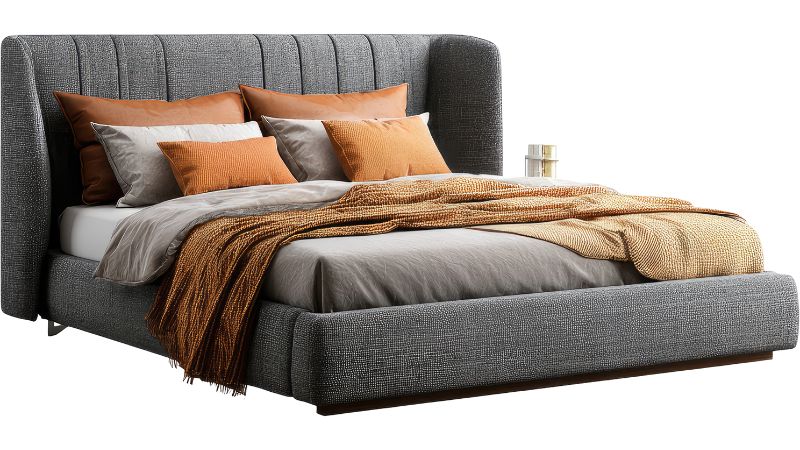
Every good story needs a strong main character, and in your bedroom design, that’s your bed. Before you do anything else, you must anchor the room with this key piece.
Is your heart set on a stately, tall upholstered bed or a minimalist platform bed frame? This choice sets the emotional tone. It is the largest piece of furniture and will determine the scale and presence of everything around it. Choose the bed you truly love, the one that makes you feel comfortable and calm. Everything else will gracefully play a supporting role to this star.
Step 3: Discover the Common Thread
Here lies the core principle that separates a “collected” look from a “cluttered” one. While your furniture pieces don’t have to match, they must converse. They need a common language, a single unifying element that makes them feel like part of the same family. This is how you achieve that coveted cohesive look.
You have several beautiful languages to choose from:
- The Language of Color & Tone: This is often the most intuitive. You might choose a dominant wood tone—say, warm oak—and let it appear in your bed and one nightstand. Then, you can confidently introduce a different wood tone, like a dark wood dresser, if it shares similar warm undertones. The key is attention to undertones. Mixing a warm, honey-toned oak with a cool, gray-washed ash can feel strange, but blending woods that are all warm or all cool creates harmony.
- The Language of Material: Sometimes, color isn’t the key; texture is. Perhaps your common thread is the gentle weave of rattan or the softness of linen. A bedside table with cane panels and a lamp with a rattan base can both speak this material language, even if their colors differ.
- The Language of Style Vibe: Words can guide you. Decide on a simple descriptor for your desired mood: “coastal calm,” “rustic tranquility,” or “modern organic.” Let this vibe guide your choices. A modern bed can absolutely live with a rustic dresser if they both contribute to an “organic natural” feel.
Step 4: Balance and Contrast
With your anchor set and your common thread chosen, you can now orchestrate how the various furniture pieces come together. Here, you’ll need to strike a balance and create visual interest.
Play with Scale and Proportion
This is practical magic. Your nightstands should be within a few inches of the height of your mattress for functionality. But do they need to be identical? Not at all. You might have a two-drawer chest on one side and a small, open bedside table on the other. Just ensure they feel visually balanced in size next to your bed.
Embrace Intentional Contrast
This is the fun part. Combine different styles deliberately.
- Old with New: This is a timeless recipe. A sleek, new platform bed paired with a vintage dresser full of historical charm.
- Curvy with Straight: A bed with a soft, rounded headboard creates the perfect contrast with the clean, linear silhouettes of the nightstands.
- Light with Heavy: A light wood bed with slender legs feels airy and modern. Ground it with a heavy, dark wood dresser that feels solid and rooted.
The “Rule of Three” for Materials
A foolproof way to ensure interesting but not overwhelming variety is to limit your primary materials to about three.
For example: Wood furniture (bed) + Metal (nightstand frames) + Upholstered furniture (bench). Or: Painted furniture (dresser) + Natural wood (bed frame) + Glass (lamp and mirror). This mix of different materials adds richness.
Step 5: The Unifying Magic of Textiles and Layers
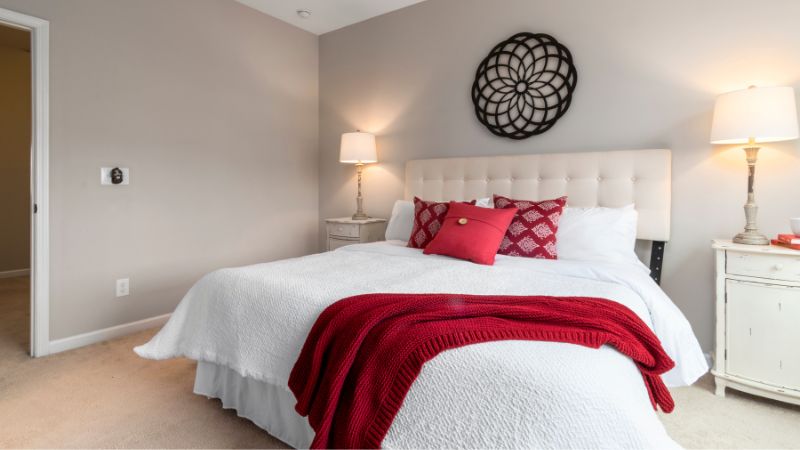
If your hard furniture provides the skeleton, your textiles are the soft skin. They can seamlessly blend all your chosen woods, metals, and paints.
- Area Rug: Never underestimate the power of a great area rug. It is arguably one of the most important tools for cohesion. A rug large enough to sit under the front legs of your bed and nightstands literally ties the furniture together on the floor. It absorbs any visual tension between contrasting wood tones.
- Bedding: Your duvet, sheets, and pillows are a huge swath of color and texture. If you’ve mixed warm wood and cool gray paint, for instance, choose bedding in a neutral, bridging color like soft white or warm gray. Then, use throw pillows in accent colors pulled from your rug or artwork to create a color story that flows around the room.
- Curtains: Curtains add a final, softening vertical layer that frames the space and can reinforce your color palette.
Step 6: Personality and Light
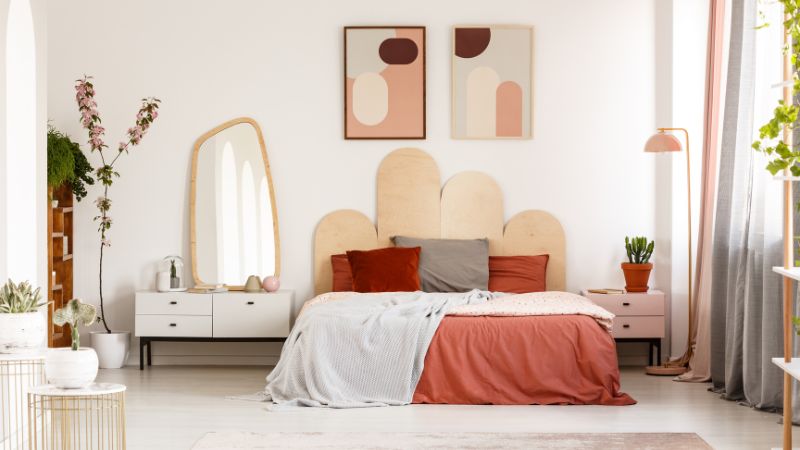
Now, infuse life and light. This is where decorating your room becomes purely personal.
- Lighting with Character: Your lamp choices add personality and warmth. Matching nightstands do not require matching lamps. In fact, different lamps with a shared finish (like both in brass or both in ceramic) can be more interesting. A tall, architectural lamp on one side and a smaller, sculptural lamp on the other adds dynamism.
- Art and Objects: The walls and surfaces are your gallery. Art above the bed or dresser, a few well-chosen books on a nightstand, a vase, a framed photo—these elements distract the eye from any minor differences in wood type and instead showcase a life well-lived.
Wrapping Up
Afraid to experiment with different layouts? Don’t be. Afraid to experiment with different combinations of throws and art? Please do. Furniture can be moved. Pillows can be swapped. You want a cohesive room, not a perfect one. By embracing the mix, you make a room that is authentically, comfortably, and beautifully yours.