Some furniture brands don’t just furnish homes—they define eras. Here are ten notable vintage furniture makers and the reasons each is worth your attention. We’ve broken it down simply: design style, what they’re famous for, and the key products to look for.
Hoolnn
-
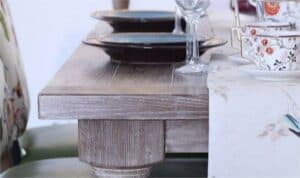
Design Style: French country elegance meets vintage antique charm. Specializes in timeworn finishes, hand-carved details, and solid wood construction that feels both rustic and refined. Also offers modern and industrial styles—versatile enough for any room, any era.
-
What They’re Famous For: A modern OEM manufacturer (est. 2009) with old-world soul. Full-service craftsmanship under one roof: design, woodworking, painting, and quality control. 10,000 sqm facility, 95 experienced staff. Each piece is treated like an artwork, not just furniture.
-
Key Products: Everything for the home—bedroom suites, dining tables, living room bookcases, office desks, kitchen cabinets. Special strength in antique-style wooden furniture with hand-distressed finishes. Also produces clean-lined contemporary and industrial pieces for buyers who want variety from a single trusted maker.
Heywood-Wakefield
-
Design Style: Mid-Century Modern with soft, rounded edges, smooth planes, and gently curved lines. Known for that signature “blond” look using solid Northern Yellow Birch.
-
What They’re Famous For: Nearly 200 years of American craftsmanship. Their steam-bending technique creates those distinctive curved backs without sacrificing strength. Revival in the 1990s keeps original designs alive.
-
Key Products: The Cat’s Eye Chair (oval back cutout, steam-bent crown), M 789 G dining table (concealed extension, aligned grain to prevent warping), Isabel Buffet (flush top, French dovetail joints).
Ethan Allen
-
Design Style: American classic with range—Art Deco gold starbursts, clean industrial, and that beloved Colonial traditionalism. Pre-1990s pieces are the vintage gold standard.
-
What They’re Famous For: Building most of what they sell for decades. Hand-stitched upholstery, hand-rubbed finishes, and surprising value for heirloom quality. Every stitch is done by hand on premium pieces.
-
Key Products: Art Deco Gold Starburst Mirror, Montrose industrial floor lamp, Landon Ottoman (footrest, coffee table, or bench), English Georgian wingback chairs.
Kroehler
-
Design Style: From Mission styling at the turn of the century to comfortable, affordable mid-century American. Clean lines, practical forms that families loved.
-
What They’re Famous For: Once the world’s largest furniture maker. Invented the Unifold Davenport—a sofa that folds into a bed. Changed production forever with assembly line methods. A Naperville, Illinois legend.
-
Key Products: Unifold Davenport sleeper sofa (quartersawn oak, Mission styling, folding metal frame), mid-century lounge chairs, sectionals that defined 1950s-60s American living rooms.
Drexel Heritage
-
Design Style: Everything from French Provincial (curves borrowed from Louis XV) to clean Mid-Century Modern walnut. Queen Anne, Chinoiserie, Mediterranean—they did it all with grace.
-
What They’re Famous For: First furniture company to hire staff designers in the 1930s. The Declaration collection designed by Stewart MacDougall and Kipp Stewart is holy grail for collectors. Built a desk for General MacArthur during WWII.
-
Key Products: Declaration walnut credenzas and side tables, Profile and Projection collections (sculptural shapes by John Van Koert), Campaign-style wall units with brass details.
Eldred Wheeler

-
Design Style: Faithful 18th-century American reproductions. Queen Anne, Chippendale, Federal—executed with museum-quality precision. Tiger maple was their signature wood.
-
What They’re Famous For: Premier builder of period reproduction furniture. Their craftsmanship was so exacting that collectors make exceptions for their pieces even when they don’t usually buy reproductions. Master woodworking, down to the pad feet and tapered legs.
-
Key Products: Queen Anne oval top side table (tiger maple, tampered legs, pad feet), tea tables, lowboys, and case pieces that mirror Joseph Downs’ famous illustrations.
Stickley

-
Design Style: Yes, Mission is their foundation—but also Early American (Cherry Valley), 18th-century Colonial Williamsburg reproductions, ornate French/English/Italian (John Widdicomb), and even swooping Mid-Century modern in walnut.
-
What They’re Famous For: The name is practically synonymous with Mission. But smart survival: when Mission faded, Leopold Stickley launched Cherry Valley in the 1930s and kept the company alive. Audi family rescued it in 1974.
-
Key Products: Mission oak settles and chairs, Cherry Valley Collection, Colonial Williamsburg Bombé Chest-on-Chest, Walnut Grove modern collection, Nichols and Stone Windsor chairs.
Baker Furniture
-
Design Style: Timeless elegance with global DNA. French silhouettes, subtle Art Deco, Asian architectural influences. Quiet grandeur, not flashy. Walnut, gold leaf, bronze, marble.
-
What They’re Famous For: 135 years of design excellence. Collaborations with legends: Barbara Barry, Jacques Garcia, Laura Kirar, Orlando Diaz-Azcuy. They don’t chase trends—they set standards.
-
Key Products: Oval X Back Lounge Chair, Cradle Wing Chair, Ming Cabinet, Diamond Chest (burnished gold leaf, bold red interior), Neue Sofa, Smile Sofa, Vienna Dining Table.
Lane Furniture
-
Design Style: Danish Modern for the American masses. Clean, streamlined, approachable. Also dabbled in 1970s Brutalism (Pueblo line) and futuristic Brasília-style (Silhouette).
-
What They’re Famous For: Started as the Standard Red Cedar Chest Company. Their “sweetheart chests” were engagement ring alternatives in the 1940s. The Acclaim collection became the best-selling furniture line in America by 1963.
-
Key Products: Acclaim tables and dressers (dovetailed joints, contrasting wood borders), Pueblo geometric-carved cases, Silhouette glass-top tables (parabolic wood bases), Perception woven walnut credenzas.
Henredon

-
Design Style: Diverse but always tasteful. Sleek 1970s Hollywood Regency, burl-wood curves, mirrored consoles, Campaign streamline. Also Georgian, Chippendale, French Provincial, Chinoiserie. They kept pace with whatever “good taste” meant.
-
What They’re Famous For: Name is a mashup of founders: Henry, Ralph, Don. Early adopter of designer collaborations—Dorothy Draper (1953), Frank Lloyd Wright (1955 Taliesin Ensemble), later Ralph Lauren and Laura Ashley. Vintage case pieces are collector catnip.
-
Key Products: Taliesin dressers (angular, dentil motif), Dorothy Draper España line, Scene One and Scene Three campaign pieces (brass hardware, burl, lacquer), olive burl Post-Modern cabinets, Georgian gentleman’s chests.
FAQs
What’s the difference between vintage and antique?
Age is the main distinction. Antique = 100+ years old. Vintage = at least 20–30 years old, typically 1930s–1990s. Antiques are rarer, often more valuable. Vintage is nostalgic but still fits modern homes.
What should I look for when buying vintage upholstery?
Check the frame—solid wood is good, particleboard is not. Look under cushions: springs should be intact, webbing not sagging. Ask about reupholstery history. Original fabric in good condition adds value, but don’t be afraid to re-cover if the frame is sound. Just keep the original lines.
How do I care for vintage wood furniture?
Keep away from direct sun and heat vents. Dust with a soft, dry cloth. Use quality furniture wax or polish sparingly—never silicone-based products. Maintain indoor humidity to prevent cracking. For serious restoration, consult a professional who specializes in period pieces.